
Exploring Wildlife Art: Concepts and Techniques from James C D Robbins

Updated: Feb 3
Wildlife art has a unique ability to capture the beauty and complexity of nature. I have always had a strong alignment with wildlife portraying the intricate relationships between animals and their environments. In this blog post, I will delve into my artistic techniques, share my inspirations, and provide practical tips for aspiring wildlife artists.

The Essence of Wildlife Art
Wildlife art is more than just a representation of animals; it embodies the spirit of the natural world. I strive to convey emotions, stories, and represent the animals or birds or marine creatures in their natural environment. This genre of art invites viewers to appreciate the beauty of wildlife and potentially raises awareness about conservation issues.
A little back story
I produce detailed and lifelike representations of wildlife. My work encompasses a variety of species, from blue crab to elusive deer. I draw inspiration from my experiences in nature as well as months spent living on a game farm in my late teens early 20's spending countless hours observing animals in their habitats. This opportunity allowed me to capture not only the physical attributes of the animals but also their behaviors and interactions.

Left: Myself and Clarence Tilenius on the Game Farm (1978) Clarence the lion cub - 3 weeks old - born on the game farm
I met Clarence Tilenius in Winnipeg while he was creating a diorama installation at the Museum of Man & Nature. An amazing man and prolific painter with an equally amazing and humbling story. (for another time) I shared my portfolio with him and he invited me to join him at the Okanagan Summer School of Art where he was teaching a Wildlife drawing and painting course on the Okanagan Game Farm just outside of Penticton. During my first summer on the Game Farm I befriended Florence and Ed Lacey who ran the farm. Florence asked me to help her with several tasks on the game farm, one of which was daily bottle feeding one of two lion cubs that had been born at the farm the week before I arrived. I fell in love with the little pot bellied cub instantly. He was named Clarence, partly after Clarence Tilenius and partly after the "Clarence the cross eyed lion" from Daktari a TV series from the 60's. He had no teeth at this point and eagerly drained the bottle of formula in a matter of minutes. Before 2 months had passed he had sprouted needle sharp teeth and had fresh meat added to his diet. We played and tussled for a time each day and when I left for England at the end of the summer I was saddened to not have him be a part of my day anymore.
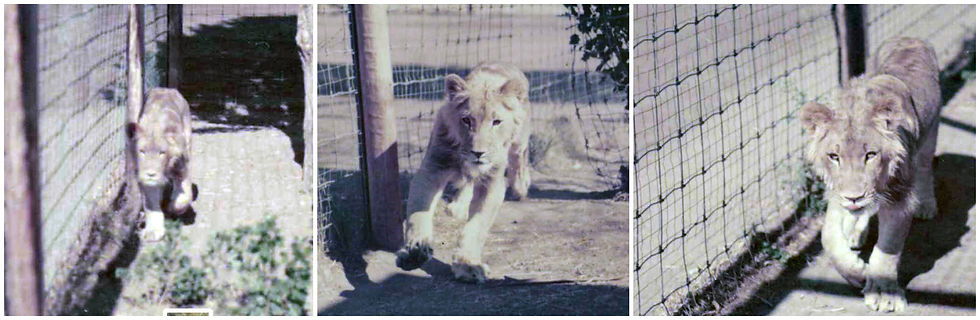
Clarence trots around the enclosure. A memorable reunion.
The following summer, I returned to the Game Farm for another season of the drawing and painting course. I immediately found Ed Lacey and inquired about Clarence. Was he still here on the farm? Ed told me he was and took me to see him. He had graduated from his little cardboard box in the nursery to a large fenced enclosure.
I was amazed to see how he'd grown. He had the beginning of a mane and weighed about 120 or so pounds. When I approached he was lounging by the fence under a small wooden sign declaring "My name is Clarence" A gaggle of kids were gathered by the fence calling out his name over and over. He ignored them, looking bored with his chin resting on one paw. I walked over to the fence and crouched down a few feet away and made the same "kissing" noise I used to make when I brought him his bottle. I was amazed to see him jerk his head up and look in my direction. I made the sound again and he leapt to his feet and bounded to the fence in front of me. He jumped up, placing both paws on the fence and huffed loudly. I was staggered - He remembered me! Ed asked if I wanted to go in the cage with him. I asked if he thought it'd be ok? He assured me that Clarence had been handled daily and it was perfectly safe. I answered in the affirmative. We walked around to the gate which Ed unlocked. Clarence had run to the gate already and when we entered he jumped up, putting a huge paw on either shoulder knocking me onto my back. He clambered onto my chest and proceeded to lick my neck and face with his sandpaper tongue. Ed pulled him back so I could stand and Clarence, still a cub, took off running around the enclosure like a housecat with the zoomies. The photos above I took during this romp. He later settled down and rubbed his head and side against me, rumbling in his chest with gurgling sound that seemed akin to a cat's purr of contentment. I spent a fair amount of time with him that summer. He would Chuff and rub his head against the cage whenever I approached. The most amazing and unexpected reunion, such a privilege!
Over that summer and the 2 summer's following I was able to go into enclosures with Timberwolves , white rhinos (the Lacey's sons rode them) I walked a Siberian tiger, was almost flattened by a Musk Ox (they have terrible temperament)
and stalked mule deer and white tail in their enclosures with my camera. On several occasions animals were brought out of their pens and were brought to an open area for all of the students to draw and photograph. Cuda the cougar, Barney, a 3-4 month old black bear cub and Winnie who was a a full grown Siberian Tiger. The Game Farm was also blessed with many new additions to their ranks each year and the nursery was very busy. A Siberian tiger cub, Lynx kittens, a Timber Wolf litter, many Elk and deer, numerous Collared Peccaries. These summers were formative for me, leaving a life long love of and attachment to all things wild.

Techniques
I employ a range of techniques to bring my wildlife art to life. Here are some key methods that aspiring artists can learn from:
1. Observation and Sketching
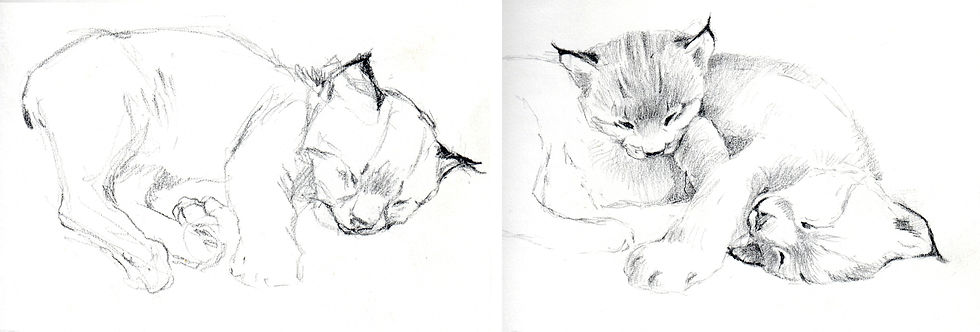
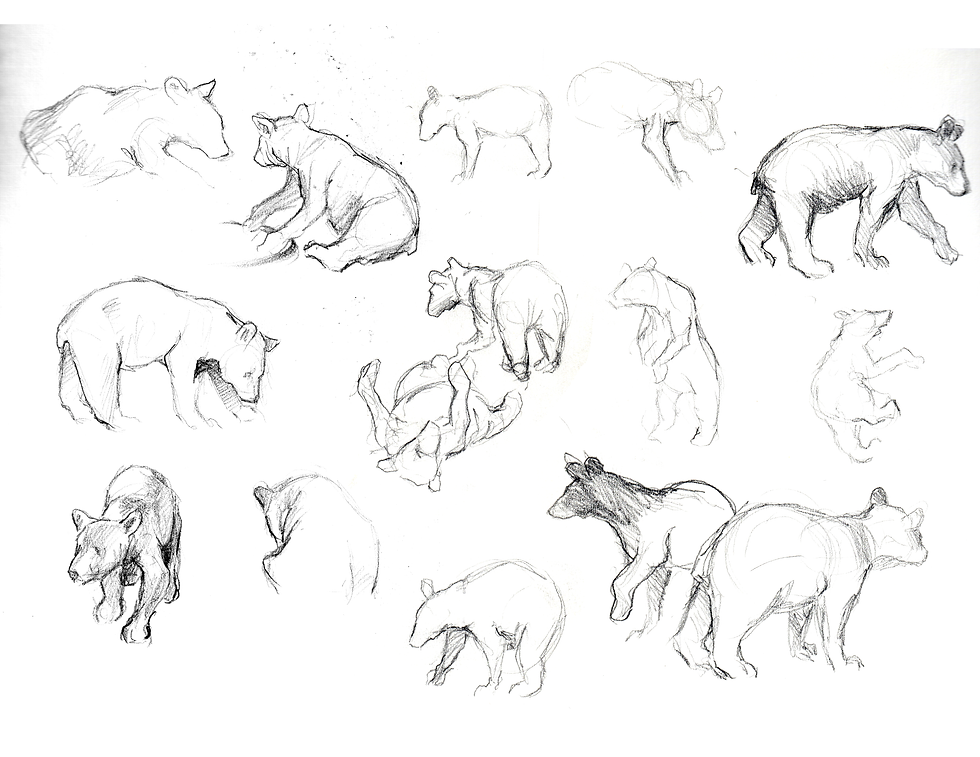
Learning the underlying skills is essential before putting brush to canvas. I spend significant time observing my subjects. I make quick sketches to understand their anatomy, movement, and environment. This foundational step is crucial for creating realistic representations.
Tip: Spend time in nature, sketching animals in their habitats. Visit zoos and animal habitats. Focus on capturing their movements and expressions.
Animals rarely hold a pose for long, learn to look while you sketch in an automatic way, ie. more time spent looking and then placing definitive marks on the page. This is helpful in expressing the gesture or motion of the animal.
Capture environments wherever possible for use in paintings.
Below are some sketches from those summers


2. Getting Started
I use a combination of my drawings and photo references when creating a painting. A process I developed in my years of film design translates perfectly to my paintings. Often I will combine the elements in photoshop to mock up the final painting. This adds a layer to the creation process where I can adjust composition and lighting and overall palette. Once I arrive at a design I sometimes will freehand the drawing onto the canvas. Some paintings requiring more precision, I will grid out the concept to transfer it as accurately as possible.
Tip: Experiment with photoshop or other editing software to create your own designs. Start with broad strokes and gradually refine details.
3. Color Theory
Understanding color theory which was a strong part of my learning at college in London. It is essential for wildlife artists. I carefully selects my color palette to reflect the natural hues of the animals and their surroundings. I use complementary colors to create contrast and draw attention to specific elements in his artwork.
Tip: Study the colors found in nature. Create a color wheel based on your observations to guide your palette choices.
learn to color match with a limited palette instead of using an extended palette that will be messy and confusing.
My palette consists of 6 colors from which I can mix almost any color I need for my paintings. Cadmium Yellow Light, Cadmium Red, Alizarin Crimson, Burnt Umber, Ultramarine Blue and Titanium White. I do not use black from a tube, I mix my blacks so I can weight my shadows toward cool or warm tones as a base color. Color is subjective and is influenced by the color that it lays next to which personally is one of the biggest curves to tame during the creation of a painting and a strong reason to learn to "trust the process"
4. Light and Shadow
Light plays a crucial role in wildlife art. Once again I am well served from my years in film. Like a cinematographer I use light and shadow to create dimension and mood in my paintings.
Tip: Practice painting under different lighting conditions. Observe how shadows change throughout the day. Also note the overlying principle that cool colors recede and warm colors advance. This rule goes a long way to developing depth in a painting.
5. Storytelling Through Composition
I carefully consider the composition of my artwork. I place animals in dynamic poses or interactions in ways that allow the eye to move easily through the image while utilizing proven compositional techniques to guide the viewer. This technique engages viewers and invites them to explore the narrative behind the piece.
Tip: Think about the story you want to tell with your artwork. Use composition to guide the viewer's eye through the scene.
The Importance of Conservation in Wildlife Art
Wildlife art serves a dual purpose: it celebrates the beauty of nature while also raising awareness about conservation issues. I plan to do a series specifically dedicated to habitat loss and endangered species encouraging viewers to reflect on their impact on the environment.
Inspiring Change Through Art
I have the power to inspire change. By showcasing the beauty of wildlife, my paintings can evoke emotions and motivate individuals to take action in support of conservation efforts.
Tip: Consider how your artwork can contribute to conservation efforts. Partner with local organizations or donate a portion of your sales to wildlife protection initiatives.
Practical Tips for Aspiring Wildlife Artists
If you're inspired by my artwork and want to explore wildlife art, here are some practical tips to help you get started:
1. Invest in Quality Materials
Using high-quality materials can significantly impact the outcome of your artwork. Invest in good paints, brushes, and canvases to ensure your work stands the test of time.
2 Take care of your brushes.
They are your conduit to your images and quality brushes are not cheap.
3. Create a Dedicated Workspace
Having a dedicated space for your art can enhance your creativity. Set up an area where you can comfortably paint and store your materials. If you have to break down your space and rebuild it for each piece your output will suffer. Make it easy to paint or draw.
5. Keep Learning
Art is a continuous journey of learning. Attend workshops, take online courses, or read books on wildlife art techniques to expand your skills.
6. Practice Regularly
Like any skill, practice is essential for improvement. Set aside time each day week to work on your art, experiment with new techniques, and refine your style.
Conclusion
Wildlife art, is a powerful medium that captures the beauty of nature and raises awareness about conservation. By understanding basic techniques and applying them to your own work, you can create art that not only showcases the magnificence of wildlife but also inspires others to appreciate and protect it.
As you embark on your journey in wildlife art, remember to observe, practice, and connect with the natural world around you. Your unique perspective can contribute to a greater understanding and appreciation of the wildlife that shares our planet.

Comments